
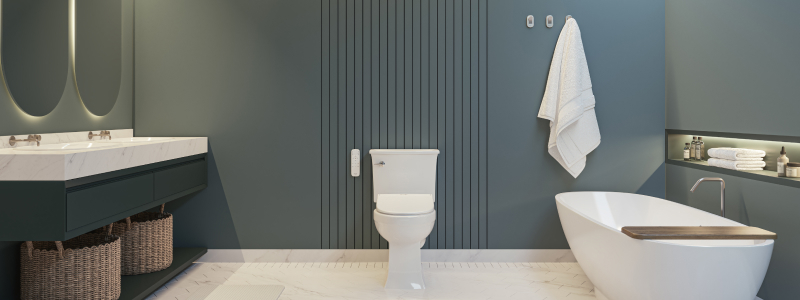
- Bidet water is clean: Bidets use the same treated tap water that comes from your sink or shower, making it safe and hygienic for washing. Spray water does not come from the toilet bowl or toilet tank.
- They clean more effectively than toilet paper: A gentle stream of water helps remove residue more thoroughly and comfortably than dry wiping alone.
- Modern bidets are designed with hygiene in mind: Features like stainless steel nozzles, retractable spray wands, and angled sprays help prevent nozzle contamination.
- Routine cleaning keeps bidets sanitary: Most models include nozzle-cleaning functions and can be easily removed for occasional deep cleaning.
- Bidets can support better hygiene when used properly: Front and rear wash options help ensure safe use, especially when cleaning from front to back.
Thinking about adding a bidet to your bathroom? You're in good
company! Bidets are more popular than
ever, and for good reason. They save toilet paper (and trees) and many offer
luxury features that improve comfort and hygiene.
But you can't help but wonder, are they sanitary?
Most bidets are attached to your toilet, so there’s some logic to
thinking that they may not be the cleanest of bathroom tools. But the truth
is that bidets are engineered to be hygienic and user-friendly. Here's what
you should know.
Are bidets clean?
Yes, bidets are designed to be as clean and hygienic as possible.
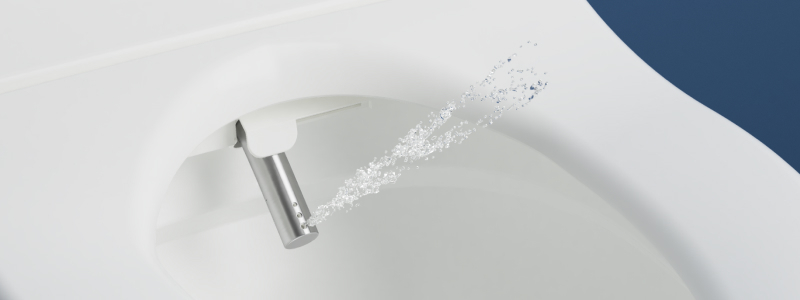
Some bidets have stainless steel nozzles, which are resistant to bacteria
and corrosion. Other bidet nozzles also come with a cover or fully retract,
so they’re less likely to be hit by urine or fecal matter. Some bidet
nozzles are also positioned slightly behind the target area and spray at an
angle to minimize unwanted splash.
Is bidet water clean?
Yes, the water that bidets use to wash is very clean.
The water that a bidet uses to wash is the same as the water that comes out
of your sink or shower. This tap water has been treated by your
local water
utility so that it’s safe enough to wash with.
That clean water then comes out of your toilet’s main water line and gets
diverted into the bidet, ready for whenever you need a wash. The bidet’s
spray water doesn’t come from the toilet tank or toilet bowl.
Do bidets actually get you clean?
You wouldn’t consider your hands washed if you just used a paper towel,
right? You would want to wash with soap and water.
A bidet doesn’t use soap, but it does use a gentle stream of water to wash
you. This makes them inherently cleaner than just wiping with toilet
paper.
Water is also gentler down below than wiping, so it’s a much more
comfortable experience overall.
Since bidets mainly use water to get you clean, they’re also the more
sustainable choice. It takes a lot of trees and water to make toilet paper,
and Americans alone use 36.5 billion rolls per year.
By switching to a bidet, you’re not just getting better hygiene —you’re
helping the planet, too.
How do you keep bidets clean?
You will need to deep clean your bidet every once in a while, just
like the
rest of your toilet. Most bidet seats come with quick-release buttons that
make them easy to remove. From there, you can wipe down the bidet with a
gentle cleanser like dish soap to clean it. From here, you can move on to
cleaning the bidet nozzle, where water comes out of the bidet.
One of the best things about modern bidets, from bidet attachments to
electronic bidet seats, is that they come with some
kind of nozzle cleaning
function. This makes routine nozzle rinses easy (and sometimes, automatic),
but build-up can still occur over time, especially on high-use toilets. When
you’re deep cleaning, use a gentle cleanser and a toothbrush to scrub the
nozzle clean.
Are bidets safe for all genders?
Bidets are designed for everybody, and that means that the
specific needs for
all genders are carefully considered by bidet manufacturers too.
You’ll find that many bidets come with front and rear washes to make sure
that all body types are able to get a complete wash. Depending on the type
of bidet, there will either be a dedicated front nozzle, or one nozzle that
can be positioned for front or rear washing.
We hope that tackling some of these questions helped ease your mind about
using bidets.
It’s only natural to have questions about new technology, especially ones
that involve your hygiene and well-being, but you can be sure that bidets
are safe. Hopefully you’ll do some more research to see how beneficial they
can be!