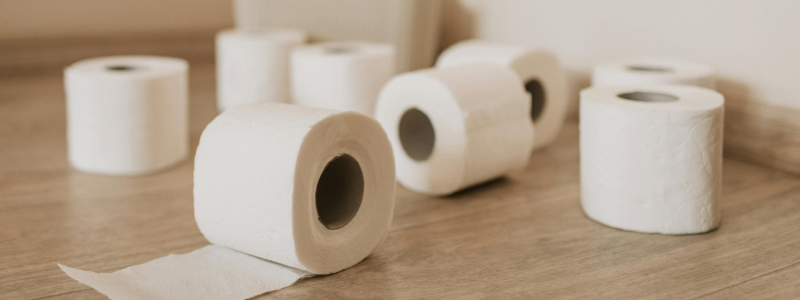
Rolling, perforation, decorating, and packaging.
At this stage in the manufacturing process, the toilet paper wouldn’t fit in your house, let alone your bathroom. It's contained in giant rolls that, in some cases, can weigh up to 40 tons!
These massive reels are unwound with specialized machines that separate them into regular-sized rolls for distribution. They are also layered if it's a multi-ply product, perforated with tiny holes for softness, dyed bright or pastel hues if desired, and decorated with patterns or designs. All that’s left to do is to package it up and ship it to stores and warehouses. It is important to note that the toilet paper industry uses vast amounts of energy and fossil fuels, not only during production processes, but also in the transportation of toilet paper and its resources around the globe.
How is recycled toilet paper made?
Toilet paper made from recycled paper—instead of virgin wood—undergoes a similar manufacturing process. But there are some major differences along the way.
To create pulp this way, recycled paper has to undergo several distinctive processes, including the sorting and removal of non-useable materials, like plastic and cardboard. It also has to be thoroughly broken down, cleaned, and treated to remove any leftover ink. After the creation of the pulp, the manufacturing process begins to mirror that of regular toilet paper.
Helping the planet by using less toilet paper.
Toilet paper is a convenient way to clean yourself after you go. But it’s also tough on the environment. Reducing the amount of toilet paper you use with a bidet—or by using T.P. made from sustainable or recycled materials—not only helps save trees and energy. It helps reduce the amount of pollution released into the environment, too.