
null Skip to main content

Brondell Pro is now $99.99. Breathe easier–save even more when you pay with FSA/HSA funds.Shop Now

See terms

Give the gift of everyday luxury! Enjoy up to 30% off select bidets & showers this holiday season. Shop now!

See terms.

Brondell now accepts HSA/FSA! Shop eligible bidets and ~30% using your pre-tax health benefits

Learn More

Order by 12/12 to get your gifts by 12/24 with standard shipping!Shop now!

Learn More

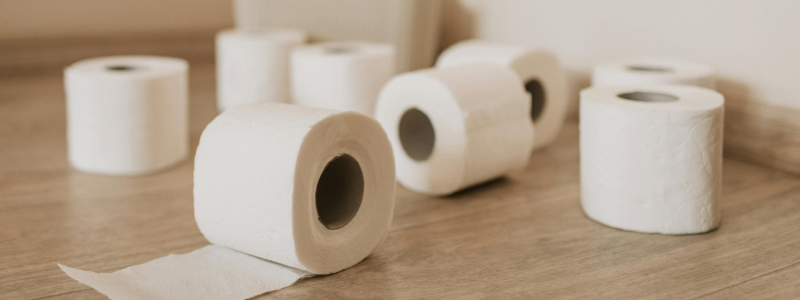
Toilet Paper rolls scattered on hard wood floor.
Image
Image

How Is Toilet Paper made?

In the age of computers and cell phones, paper isn’t as essential as it once was. But there’s one kind that would be hard to go without—and that’s toilet paper. In fact, billions of rolls of toilet paper are manufactured every year in the United States alone. In fact, the US accounts for around 20% of the world’s toilet paper consumption, while making up just 4% of the world's population.

As you might imagine, toilet paper isn’t soft and white naturally. It takes a lot of resources and energy to get it that way. Here's a look at how toilet paper is made and how that process impacts the environment.

Trees are cut down and turned into pulp.

Unless it’s made from a sustainable fiber—like bamboo—or post-consumer materials, toilet paper relies on virgin wood from freshly harvested trees. Logging to make toilet paper often occurs in old-growth areas, like the boreal forest in Canada, impacting local wildlife, native plants, and indigenous populations.

After harvesting, the logs are taken to a pulp mill and cut into wood chips. This is the first step in the process of converting trees into paper pulp.

The pulp used to make toilet paper is mostly made from cellulose, a natural fiber that exists in plants and trees. Manufacturers use a chemical process to break down the wood chips and remove biomaterials, like lignin, which are too hard and rigid to be used to make toilet paper.

When the process is complete, the paper pulp is flattened into sheets and prepared for further treatment.